Frozen Floor
Holds the multiplier steady for a placement instead of raising it. Frustrating in the moment, but it buys you a free look at the tower before committing further.
Crash game by Galaxsys
Every floor you add multiplies your bet. Every floor you add also brings the whole thing closer to collapse. This guide covers how a round actually resolves, what each bonus floor changes, and how to choose a cash-out point before the round starts rather than during it.
4rabet login See how a round works
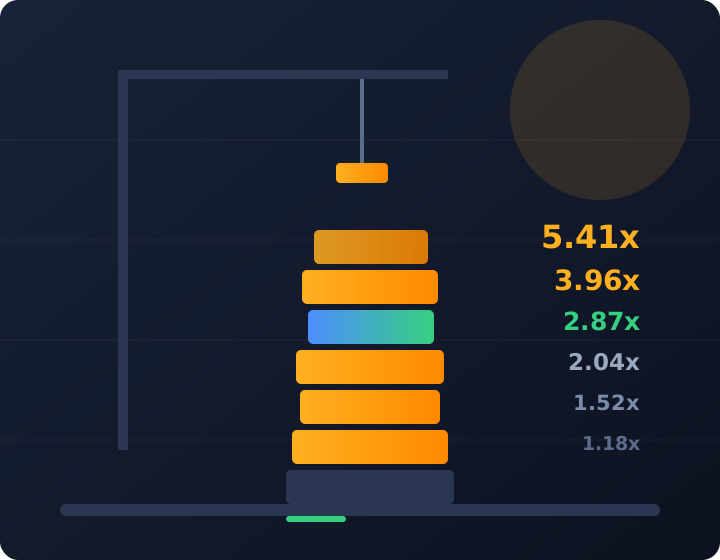
The loop
Four steps, repeated until you either bank the round or lose it. There is no hidden phase and nothing resolves while you are away from the screen.
You choose the bet before the first floor drops. That number is locked for the whole tower — you cannot top it up halfway to chase a bigger payout.
The crane swings a floor over the site and drops it. A clean landing adds the floor to your tower and pushes the multiplier up.
After every successful floor you get the same two buttons: Cash Out to end the round at the current multiplier, or Build to risk it on one more.
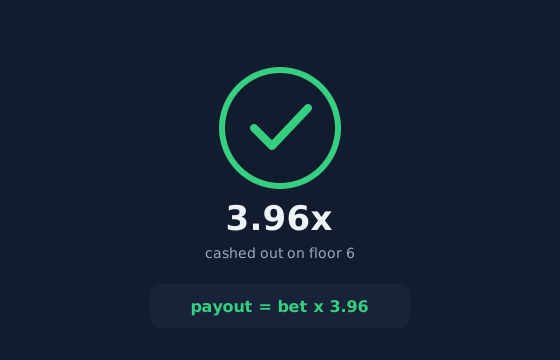
Cash out and the payout is your bet multiplied by the figure on screen. Miss the landing and the tower falls, taking the stake with it.
Each floor adds to what came before rather than resetting it, so the curve steepens as the tower grows. The gap between floor two and floor three is small. The gap between floor eight and floor nine is not.
That is the entire tension of the game: the increments that matter most sit exactly where the risk of losing everything is highest. A tower abandoned at 2.5x pays modestly and reliably. A tower pushed to 12x pays rarely.
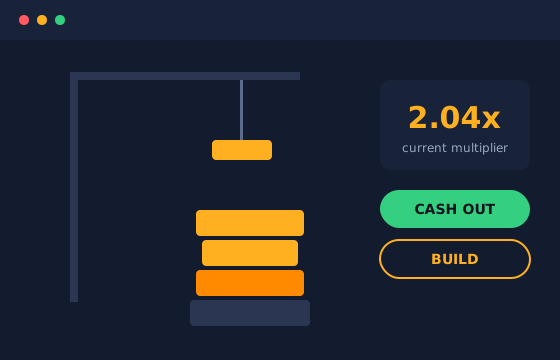
Special tiles
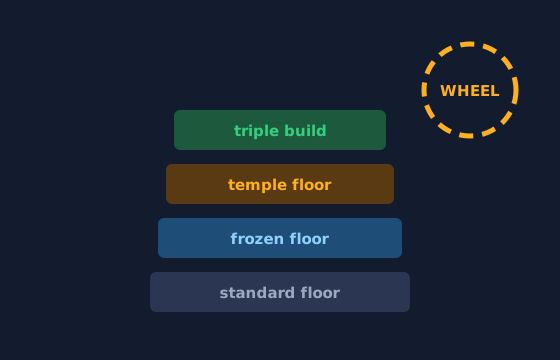
Not every floor behaves the same. These are the ones worth recognising on sight, because each one changes whether pressing Build again is a good idea.
Holds the multiplier steady for a placement instead of raising it. Frustrating in the moment, but it buys you a free look at the tower before committing further.
A high-value tile that jumps the multiplier further than a standard floor. It is also the point where most players talk themselves into one more storey.
Places three floors in a single action. It accelerates the tower quickly — and moves you into the fragile zone three times faster than you planned.
A wheel spin that applies an extra multiplier to the round. Outcome is random, so treat it as a bonus you received rather than one you can aim for.
Playing it
No approach changes the maths — the house edge is fixed. What an approach does is stop a losing streak from turning into a much bigger loss, and that is worth more than it sounds.
Cash out after two or three floors, every round, without exception. Hit rate is high and the payouts are small. The reason it works is that it removes the decision entirely — you are never standing there weighing up one more floor.
Pick a target multiplier before the round — say 2.5x — and cash out the moment it appears. Written down in advance, a target is a rule. Decided mid-round, it is a negotiation you will lose.
Divide the bankroll into fixed slices and stop when a slice is gone. This does nothing to your odds, but it caps the damage of the run where nothing lands.
Keep the bet the same regardless of what just happened. Doubling after a loss feels like recovery and is simply a faster route to the table limit.
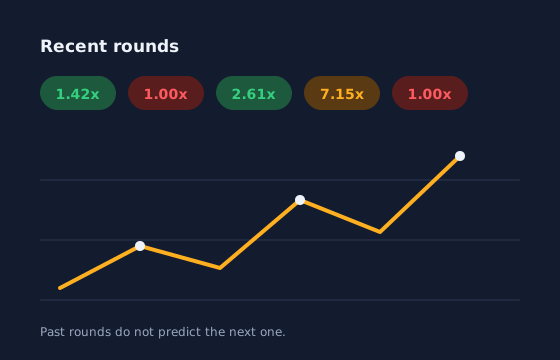
It is not stopping too early. It is treating the previous round as information about the next one. Five collapses in a row do not make a tall tower "due", and a run of high multipliers does not mean the game is loose. Each round is generated independently, and the history strip exists to show you what happened, not what is coming.
The second most expensive habit is raising the stake specifically to win back a loss. The multiplier needed to break even climbs faster than most people estimate, and the round where it finally lands is the round you were not supposed to still be playing.
Play responsibly. Tower Rush is a game of chance with a built-in house edge, not a way to earn. Only stake money you can afford to lose, set a limit before you start, and stop when you reach it. If gambling stops being entertainment, seek support from a service in your country.
The numbers
Published RTP figures for Tower Rush sit in the region of 96% to 97%, which is competitive for a fast crash-style title. Treat that as a long-run average across an enormous number of rounds, not a promise about your session — over an evening the variance dwarfs the edge.
The exact figure can differ by operator and by configuration, so check what your casino publishes rather than trusting a number from a review site. Where the game offers a provably fair check, use it: it lets you confirm after the fact that the outcome was fixed before you pressed Build.

Tower Rush is available in the Odds96 casino lobby, with stake limits suited to small-ball play as well as bigger sessions.
Player notes
★★★★☆
The pacing is the appeal. A round is over in twenty seconds, so a bad one stings for about a breath. I stick to three floors and stop.
★★★★☆
Triple Build is a trap if you have not decided your exit beforehand. It puts you three floors higher than you meant to be and the button still says Build.
★★★★★
Nicer than a plain curve game — you can see the tower getting precarious, which makes cashing out feel like a decision instead of a guess.
Questions
It is a crash-style game from Galaxsys. Instead of a rising curve, you build a tower one floor at a time; the multiplier grows with each floor placed and the round ends when you cash out or the tower collapses.
Stake multiplied by the multiplier displayed at the moment you press Cash Out. If the tower collapses before you cash out, the round returns nothing.
Published figures are generally in the 96% to 97% range, though the exact value can vary by operator and configuration. Check the figure your own casino publishes in the game info panel.
No. Rounds are generated independently, so the history strip carries no predictive information. Any system built on reading it is reading noise.
Many operators expose an auto cash-out setting for crash titles, which closes the round automatically at a multiplier you pick in advance. Where it is available it is worth using, mostly because it removes the in-the-moment decision.
Some operators offer a demo or fun mode. If yours does, use it long enough to learn the button rhythm before playing with a real balance.
It holds the multiplier at its current value for that placement rather than increasing it. You keep the floor and the tower grows, but that particular step adds no value.